Showing posts with label Femme of the Week. Show all posts

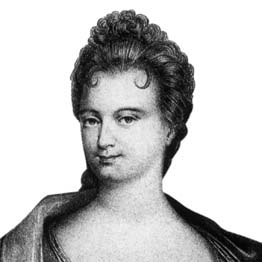
Femme of the Week: Madame Campan

Lady writer Madame Campan, born Jeanne Louise Henriette Genet, is responsible for the well written and entertaining title: The Memoirs of the Court of Marie Antoinette.  Aside from the book she had many other accomplishments, including securing the position as lectrice to the daughters of France,  lady in waiting to Marie Antoinette, governess to the Bonapartes and later Napoleon would place her in charge of the Imperial Educational Establishment of the Legion of Honour at Ecouen! Quite the resume!

She was born on October 2, 1752, as the eldest daughter of what would become a large family. Her father was responsible for her very strong education; he had been schooled at the College de Navarre in Paris, the University of Paris and spent several years abroad in Germany and England. She was a quick learner, and by age fourteen was reciting scenes by Racine to her father's friends and associates.

Some of these associates included playwrights, musicians and even Goldoni, who taught Louis XV's daughters the Italian language.  In time these men would share their great knowledge with Henriette, expanding her already long list of accomplishments.  Ironically, she would soon become the reader to Goldoni's prized pupils. By age fifteen, some women at court knew of Henriette and her remarkable talents, which led to gossip.  All good of course!

She could sing, play the harp and speak several languages. She was sweet and was a skilled reader.  This was her ticket to an interview for the position of lectrice to mesdames.  At just fifteen years old she left her home for a new home at Versailles (sound familiar?) She would live at the palace until the Revolution forced everyone out.  Before she left a regretful father advised her:

"Do not allow their [mesdames] compliments to elate you too much; rather be on your guard. Whenever you receive flattering attentions, you may be sure that you will gain an enemy. I warn you my daughter against the inevitable trials which you in your new career will have to face; and I swear on this day, when you are about to enjoy your good fortune, if I had been able to choose another profession for you, never would I have abandoned my beloved child to the torments and dangers of Court life."

She did something right, and survived the intriguing court of Louis XV, and thrived in that of Louis XVI not to mention the revolution. She notes one embarrassing moment, age fifteen, her first conversation with Louis XV, who was about to go on a hunt:

Louis: Mademoiselle Genet, I am told you are very learned-that you know four of five foreign languages.
Henriette: I only know two, Sire. 
L: Which are they? 
H: English and Italian. 
L: and can you speak them fluently? 
H: Yes, very fluently. 
L: Well, that is quite enough to drive any husband quite crazy!

After her career she claims that a book inspired her to collect her memories for publication. Surely aware of her special status (survival?) in a very turbulent country, she writes:
"I became privy to some extraordinary facts, the publication of which may be interesting, and the truth of the details will form the merit of my work."

The focus of her Memoirs is just as stated; they are memoirs of the court of Marie Antoinette.  The book is full of snapshots of those who ruled the cliques, interesting facts and memorable stories.  Madame was a strong Royalist and her memoirs drip with devoted loyalty to the Royal family.  The warm light constantly cast on them is clear, and we can safely say the bias certainly paints a pretty picture.

"I have put together all that concerned the domestic life of an unfortunate Princess, whose reputation is not yet cleared of the stains it received from the attacks of calumny, and who justly merited a different lot in life, a different place in the opinion of mankind after her fall."

You can read my review of Campan's Memoirs of the Court of Marie Antoinette.  If you would like to read the book you can download the e-book for free in several formats thanks to Girlebooks.com!

Click here to download a free copy of Memoirs of the Court of Marie Antoinette

Love Paperback? Get it here at Amazon.com 

Femme of the Week: La Duthé


"Let us say to the glory of Alençon that the toffee was accepted with more joy than la Duthé ever showed at a gilt service or a fine equipage offered by the Comte d'Artois."
Balzac, Honoré de. An Old Maid

Catherine Rosalie Gérard (La Duthé), in 1748, was born to win the hearts of many, become the talk of many, and be mocked by many.  She was a dancer at the Opéra in Paris and a star of the Champ-de-elysses.  She also dabbled with the aristocracy.  She had a charming laugh that rang through the halls, and charisma to match it.  Famously blond, she spoke with a pleasant ring to her voice which never sounded annoyed. 

She developed her own signature when performing on stage, a long pause after delivering lines.  She did not do this every time but often.  It certainly made an impression on the audience, and perhaps she aimed for a dramatic effect.

After a few performances, however, it led to the assumption that she was not all there, or possibly just could not remember her lines?  She took on the role of an assumed goose, and as author Joanna Pitman put it, she was empty headed and could not hold a conversation for anything!

But not everyone was interested in Rosalie's conversational skills.  She was captivating and happened to catch the eye of the duc d'Orléans.  In a scandalous instance it is said that he, in one way or another, asked or requested that she might spend some time with his son.  The purpose of the rendezvous would be to, "teach him the facts of life."

Her greatest catch was Louis XVI's brother, the Comte d'Artois.  The affair was short and sweet.  The Comte was slightly younger than Rosalie, and married.  And of course, she was not his only fling. The affair heated up sometime in 1775, and Rosalie received gifts and surprises from her generous Comte.  He "gave her a house in the Chaussée d'Antin," and even had the court painter Spaendonck hired to paint her boudoir.  Her new place, lavishly decorated, had cost the Comte three months and 80,000 pounds; all well spent on his pretty friend.

All the sparkle of her life led her to go around town flashing wealth and fabulousness to anyone who looked.  She called herself a sylph and her motto was: l'arc et le carquois de l'Amour.   Her acting career continued but she was becoming such a topic among gossips, she was soon the main character of a one act play. The play, debuting in Paris, while she was in residence, satirized Rosalie and her stage performances (the long pauses....the silence...etc).  It was called Les Curiosities de la Foire (Curiosities of the Fair). 

Three years prior to the Revolution she moved to England living off the generous sums she acquired from her French suitors.  When the Revolution began her property in France was confiscated. Around this time in 1792 she sat for a painting where she posed as she had seen a woman do in another painting she owned.  The artist, Danloux, chose to place her against a blue background, to him it was the color of blonds. He found the piece "very handsome, and above all a good likeness of the sitter."  

Femme of the Week: Madame de Blot

Marie Cécile Pauline d'Ennerie (or Ennery) was a woman of standards. It was a main goal of hers to, well basically, be a sylph in every way possible. She was the niece of Madame de Mauconseil, a close friend of Richelieu's. Her aunt held a popular salon, its main attraction being the guest of honor- King Stanlislaw II of Poland (Louis XV's father in law).

Pauline loved animals, and as recorded in the Memoirs of the Countess de Genlis, she had once wished for a portrait of her canary on a ring she could wear. Well, she wished it out loud and in the presence of the Prince de Conti, who asked if she would accept one from him.

George Stubbs, King Charles Spaniel.
Of course she said yes! But she desired a simple ring. He wasted no time having the ring fashioned for her, and he affixed a flat cut diamond over the top of the portrait. When she found it was not glass but an exquisite stone, she returned it, tsk tsk prince, "upon which [he] caused the diamond to be ground into powder, and used it to dry the ink of the letter he wrote on the subject to Madame de Blot."

Pauline also kept a little puppy (very tiny spaniel), like all fashionable ladies did. She cared for it so much that when she was not home she would have her ladies read to it, usually comedies, so the little pup would not get bored! In Madame de Crequey's Memoirs, the pup had a rather tragic end, as the result of a very portly priest's bottom.

In 1745 she became a lady-in-waiting to the lovely Duchesse de Chartres. She spent all her time at the Palais Royale and and was all the rage at the Palais Royale, or at least she felt that way. Pauline lived her life aspiring to be a sylph and held several ‘beliefs’ of just how a lady should life. On 18 Nov. 1749 she married Gilbert de Chauvigni, Baron de Blot. In 1752 he gained the station of Captain of the guards of the duc d'Orleans.


She always dressed in a tasteful manner and was fascinated with etiquette and courtly manners. One of her favorite topics was the bon ton and all the gossip surrounding it. She developed an obsession with good tastes, class and propriety, and would carry out this obsession in excess. Many saw her as cold.

Upholding the idea that the female sex was "bound to be ethereal," she would make due eating the smallest amounts of food when in the company of others, especially men. She did not eat chicken due to a "masculine flavor" among other silly rules she dutifully followed.

“What! Drink wine like a vulgar person? Why my dear, the correct thing is to eat a section of an orange, with a little cake and half a dozen strawberries. Then one my drink a little milk with fresh water in it- the milk of sheep, of course, what the dear little lambs are fed on.”¹

Her delicate femininity attracted the Viscount de Schromberg, and for ten years he found himself infatuated with the woman. He remained with her often and was a close confidant. Ironically he was also a close confident with the count de Frize, who happened to be her lover.

In 1776 Madame de Blot's brother died, and with his widow, the two women commissioned a large and beautiful memorial for him. The sculpture shows the Widow of the comte d'Ennry weeping with child, and Madame de Blot, on the left is weeping inconsolably. She holds a damp handkerchief to her eyes and looks up toward heaven. It lends a warm and very human light on the woman described as "too fine."


¹Grant, Colquhoun, and Renée Caroline de Froulay Créquy. 1904. The French noblesse of the XVIII century. New York: E.P. Dutton & Co. 

Femme of the Week: Madame de Tencin

If ever a girl grew up with a thick cloud of scandal about her, Claudine Alexandrine Guerin de Tencin, was one. Born into a proud yet poor family, she found herself forced at an early age to join a convent. This path of life, while chosen by many, was not the direction she saw herself take, nor did she want to, and resisted it while she could. She was unable to marry "suitable to her birth" and the only other option the family saw was to become a nun.

Reluctantly she gave in and took her vows to the church. Possibly it was a blessing for her, that she resided in a convent in a prominent social area. It was located at the far end of a popular and fashionable promenade, and friends would often come to visit. Claudine Alexandrine was sociable, pretty and talented, and she afforded no shortage of friends. The visitors were not wholly welcomed and as the convents' cardinal noted the girls vowed to leave the world behind not bring the world to them.

Escape:
After so long she decided she could not go on living the life she had accepted, and began work to leave the church. She had to renounce her vows, and five years after that she was moved to Lyon as a Cannoness. But she was still unhappy and wanted full freedom. She moved in, I believe, with her brother (right), who was not the best example for an impressionable young lady. (I know he appears as a Cardinal in the portrait but we will get to that later!) While living there she made her leave from the church permanent.

Along the way she picked up some tricks and developed some talents! For starters, she was quick with her words and could manipulate people to seeing things her way. A very useful skill to possess! She was both charming and graceful and with this type of charisma it was rather easy to do so. Once at her brothers place she immediately found herself amongst a few new suitors! His friends could not help but be infatuated by, and desired, his beautiful younger sister. What a prize!

Scandal!
She did fall in love at one point with a different fellow, leaving her brother's friends in the dust. This was the type of love that blinded the ambitious Claudine, and by accident, she got pregnant. The pregnancy would have been an incredible scandal, ruin for her and her brother if it were found out so she had the baby in secrecy at home. The baby was soon found on the steps of Saint Jean le Round and taken in by another lady. Crisis adverted!

More Scandal!
Well perhaps not fully adverted, this little spot in her history would be a dark one for years after her death, and a major spot on her reputation. The scariest maybe weirdest point in her life was when an ex-lover came over to her house, and shot himself in the head. As if that was not tragic enough for her, things got worse! He left a note explaining that Claudine Alexandrine had plotted to kill him and had robbed and cheated him. She was immediately arrested and sent to the Bastille! After a few days of investigation she was released as there was no real evidence of his claims, and the note was so bitterly written it looked as if he was the one plotting her ruin!

Aside from this scandal she was very active and intelligent and wanted her voice heard in the world of...politics! At one point she started hanging out with the Regent, and during one conversation she brought up the big pink elephant in the room. Philip, so taken aback that this charming and lovely lady had the audacity to talk politics gave a snotty short reply, to which she dropped the subject.

She later found herself having an affair with Dubois (Cardinal), from whom her and her brother reaped the benefits. (wealth and titles).

Later in life she put politics on the back burner and began to write. She published novels but tried to remain anonymous,even writing up fake dedications in her texts. She was rather good, I recommend Mémoires du comte de Comminge which is said to be somewhat autobiographical!

Femme of the Week: Duchesse de Berri

Marie Louise Élisabeth de Bourbon-Orléans was the first daughter of Philippe Charles, Duke of Orléans who was the Regent to Louis XV. Her mother was Madame Lucifer, and grandmother was Liselotte. She was born at Versailles on August 20, 1695.

Growing up she always had her own way and was a complete daddy's girl. She disliked her mother, as her father did. When she was only 9 she went on a hunt with her father, and their party noted her spoiled behavior.

When she was 15, her mother wanted her to marry the Duc de Berri, (the king's youngest grandson) however, her mother's sister the Princess of Condé wanted her daughter to be his wife. Although the Princess of Condé's daughter was very lovely, she was 2 years older than Louise Élisabeth and certain parties of the court preferred Louise. She knew she was in the running to marry such a prize as the duc de Berri. In the end things went Louise Élisabeth's way!

When her betrothal was announced, those against the marriage were quick to spread the worst rumors and gossip throughout Versailles and even Paris. The rumor that the duc d'Orleans and Louise Élisabeth had incestuous relations were talked about the most, a complete scandal to the family.

The wedding still happened, and the ceremony was lovely. Yet scandal continued to follow. After the wedding, as the new husband and wife were escorted to their residence, guests gathered to watch the lovely scene. Most of the fell victim to pick-pockets who mixed in by dressing as priest and ordinary invited guests!

The marriage to the duc was good for a few months, but before long the two were fighting in public, much to the displeasure of the king. Married in June, a scene in August left her husband very unhappy... She was at St. Cloud and had a little too much to drink. (Think Lindsay Lohan) She was so drunk that she blacked out and had to be driven back home before she could cause any harm to herself or expensive objects near her!

Sadly her husband did love her, but her progressive actions made the love cool over time. A catty girl, she picked a fight with her sister-in-law the Duchess of Burgundy. The fight cooled the relationship between her husband and his brother. This was fine until the Dauphin died making the Duchess of Burgundy the Dauphine and her husband Dauphin! Louise Élisabeth was totally loathed at court!

Louis XIV scolded her in a way that said 'he did not want to have this discussion again,' being the ultimate mortification anyone could receive. As a result many at court avoided her all together. Eventually she began to ignore her husband, and any love he had for her died. She mocked him publicly and made fun of his beliefs. He was so unhappy he even considered asking his grandfather (Louis XIV) for a separation! And all this was before he knew of her affair!

She had been sleeping with his first Chamberlain, and was trying to convince the man to steal her away to Holland! He was too cowardly to go through with it (someone had a head on their shoulders) but the scandal spread through the court and we can only assume the duc de Berri heard it too. Shortly after the scandal broke when a scene was reported, that in front of a large group of people the duc "took his wife by the neck and kicked her bottom repeatedly, threatening to shut her up in a convent for the rest of her life."

Femme of the Week: Marie-Jeanne Laboras de Mézières, Madame Riccoboni

"It is not always the lover a woman regrets when compelled to cease to love, it is the feeling, the charm, the joy of loving, joy so great that nothing can replace it."
Marie-Jeanne Laboras de Mézières (b. 1714, Paris) was not a lady of the court, yet had been born into a family once wealthy and noble, the Béarn. The family had been stripped of their wealth, and when she was a young girl she lost both her parents and had to live with an aunt. Marie-Jeanne was well educated, and grew up with fortunate looks, dark eyes, fair skin and an even figure. Where she lacked rank and wealth she made up for with wit and charisma.

At 18 she caught the eye of a well off Englishman. She was 18 and in love, and he was older and surely saw her as a mere distraction, as she was not of rank or wealth to consider for marriage! A fact of life she would learn from experience.

Marie-Jeanne would later publish her letters to her English man under the title "Letters of Mistress Fanni Buttlerd to Milord Charles Alfred de Caitombridge Earl of Plisinte Duke of Raflingth." The story tells of Fanni who is a young girl who makes mistakes and falls in love all the while putting full trust into her man. From this first edition with origninal letters (so they seem) we can tell that this 'first love' really affected Marie-Jeanne later in life, at least as a growing and learning experience.

She (Fanni or literally Marie-Jeanne) sacrifices everything for him, but he, nothing. She loses virtue and modesty, but who could be blamed but herself? Through the collection of letters you pity her, but she has learned what it means to be young, ignorant and too trusting. Whether the experience left her bitter or just damaged, it did her well. Think, Alanis Morissette... her realization of the lesson learned turned to creative energy and by 1734 she had received a role as an actress in the French play "The Surprise of Love."

She married François Riccoboni, also an actor who had written many popular plays. His parents were very successful, both actors and authors. Marie-Jeanne discovered a taste for literature and writing after meeting her husbands family. Her marriage had cooled after a few years, however she remained devoted to her absent husband. A loss of love left her miserable, but tough and she knew she needed to convince herself to deal with it. She really focused on writing as an escape, something to look forward to.

So she wrote, and she was good. So good, in fact, François began to consult her for writing advice! He went as far as publishing under her name! Now, by 1757 she decided to publish her work, and that is when she pulled out those letters between her and that Englishman that scared her heart. The style of telling a story through letters was a bit popular, yet she published anonymously. Eventually her identity was revealed, even though she did not want it to be. (friends with big mouths!)

Her later works such as The History of the Marquis of Cressy and Juliette Catesby. By 1761 she received a pension from the court, but continued to write, because it was really her passion! Eventually she was accused of not being the true author of someworks, but the claims were later dismissed. With the revolution she lost her pension, and became incredibly poor. Madame Ricconboni died on December 6, or 7th, 1792.

Image credits: Demarteau, Gilles-Antoine, 1750-1802., Flemish, active in France, French. After Vincent, François-André, 1746-1816. Head of a Woman, 1788. Color crayon manner engraving on laid paper. Sterling and Francine Clark Art Institute. 

Femme of the Week: Suzanne Curchod

In 1737 Suzanne Curchod was born. Her father was a pastor and insisted on a strong education for her. Well she got one! Author J. Christopher Herold noted that she received an "education suited for Leonardo Da Vinci." And although she never would admit it, she was quite the Latinist!

After her father died she took care of her mother, which she managed by teaching and being a governess. She worked all the time and it was very draining. When the offer to go to Paris with a friend arose, she decided to accept. She did not know the city or have much money for herself, so it was a bold move. Even though she knew she had limited funds the first thing she did in Paris was shop for clothes and accessories! When the bills came that sinking feeling in her stomach hit and at this point she realized, despite her high standards in men that had developed, she would have to marry.

Love
In 1764 she met Jacques Necker, who was a Swiss financier, in Paris. He was smart, ambitious and his career would lead him to be the French minister of finance. It was natural that the kind, smart and lovely Suzanne caught his eye. He pulled a total Mr. Darcy and did not make his feelings known to her, and left Paris on business. Now Suzanne had already decided he fit her standards in men, she just had to wait for his return.

When he finally returned he wrote to her right away, asking to see her, and she responded, "I must then write to you what I should not have dared to say to you. If your happiness depends on my sentiments, I am afraid that you were happy before you desired it. I will remain at home all the evening and will see no one else." You can only imagine the excitement Jacques must have felt at this letter, and he certainly visited her that evening. They were married shortly after and would forever be completely in love with each other. How often did that happen!

Life In Paris
Madame Necker would also advance her career, as a socialite, among the most learned persons. With the new comfort of married life she slowly gained correspondence with the hottest philosophers. It was her education that brought her so far. Some women hosted salons for artists, writers, scientists and politicians, but Madame Necker chose the circle of philosophers. She hosted gatherings where displays of wit, and eager, interesting discussions would occur. She scheduled her salons on Friday where she would host a dinner. She planned this because other popular salons were held during the week, so that everyone of importance was available on Fridays! Soon everyone was saying thank god it's Friday and headed over to her house. A glimpse of her salon from Galiani:
"A Friday does not pass but I go to you in spirit. I arrive, and I find you one minute adjusting your dress; the next minute you are lying on the duchesse. I seat myself at your feet. Thomas groans to himself silently; Grimm and Suard laugh heartily; and my dear friend Creutz notices nothing...Dinner is announced. We go out' the others eat meat; I abstain...We rise from the table and drink our coffee, everyone speaking at the same time."
Health & Death
Suzanne's stress and anxiety deteriorated her health. She was always head to head with her daughter and when it came time for her to marry things worsened. When it was time for marriage, Suzanne's choice was William Pitt. Her daughter was against the match and refused. She was constantly struggling with her daughter, and she was concerned her husband did not love her as he once did. Jacques' feelings had not changed towards his wife, and she remained his one true love.

In 1784 the couple retired to a lovely château near Geneva, which was both restful and beautiful. She devoted herself to charity and organizing and working in the hospital setting. Her health continued to fade with her anxieties, one of which was a fear of death and being buried alive, an anxiety gained from her charity work. She began making very specific arrangements for her own funeral, and in May of 1794 she passed away. She is buried among trees which she planted by hand, and along side her beloved husband, so that their ashes would mix as one.

Femme of the Week: Elizabeth Charlotte, Duchesse d'Orléans

Elizabeth Charlotte was Marie Antoinette's great grandmother. She was chosen by Louis XIV to marry his brother, the Duc d'Orléans after his first wife passed away. The marriage made her the second lady at the court of Versailles next to the Queen.

She was whisked over to France to meet her future husband, Philippe Duc d'Orléans. He appeared to her decked out in precious gems and wearing strong perfume. His surprise was just as great as hers no doubt on first sight, she did not wear much make up, in fact seemed to neglect material luxuries completely in her attire. Elizabeth (Liselotte) was fair skinned, and blond, she could pass for a "Swiss-peasant" in the way about her. In short he was not pleased and had immediately said, "how on earth am I to sleep with that?"

Maybe the irony here is that Philipe preferred men. Together they were a true odd couple. Liselotte cared not for material possessions, had no desire to follow fashion, and she loved to hunt and fish.

The duc loved fashion, scandalous gossip, and he loved being catty! He liked to spend afternoons with toys to tinker with, merely for amusement, sweets, and talking about people at court with people from court, all the while injecting wit into conversation. How did these two get on? Rather well!

Neither of them enjoyed sex. Liselotte said "the task of manufacturing children..a nasty dangerous, stupid business, from no stage of which did I ever derive the slightest pleasure." Perhaps this was because her husband had a very difficult time doing the deed. (with her.)

Drama!
In any case they had 2 sons, the Duc de Valois and the Duc de Chartres. She had drama in her life, especially when her son, the Duc de Chartres, was to marry the daughter of the marquise de Montespan, a lover of the king and her enemy. Liselotte wanted to just die when this decision was made and her disgust of the match only grew with time. She went as far as slapping her son in front of the court! She wrote to her family complaining about Françoise-Marie, and this caught up with her later in life when she was confronted with the letters. She was warned to turn her attitude around!

Eventually her son would become Regent to the young Louis XV, making her the 1st lady at Versailles. But Montespan was still alive and kicking, near 15 years her senior. Liselotte viewed it a goal to outlive her rival, and she took very good care of her health. She would write about how she took care of herself and avoided medical practices of the day she disagreed with, such as bleeding. She viewed French women as sickly, and felt herself much more healthier than they were. Instead she was known to take make walks out doors and avoid medicines.
"It has become the fashion here to complain about the air; the princesse de Conti does not want to go out at all...neither does [my daughter in law]; they are forever having purges (artificially induced), bleedings, acidulous waters, and baths (extremely hot);...I tell them...if I were to live as they do, I would be even sicker than they are..."
excerpt from A Woman's Life
Her efforts seemed to pay off and she outlived Montespan and died at the age of 70, 12.08.1722

Femme of the Week: Marie-Anne Charlotte de Corday et d'Armont

"Great thoughts are always better nursed in the heart's solitude"
Marie-Anne Charlotte was born in 1768 to Jacques Francois de Croday et d'Armont and lady Marie Charlotte-Jacqueline of Gauthier des Authieux. Her parents had an ancient noble name, however any fortune the family once had had been lost to time and they lived by very modest means. She was born a fourth child and second daughter. One sister died young, and her brothers left for the army. She also lost her mother.

She and her last sister left for the Abbaye aux Dames, where religion made a deep impression on her. She remained there until she was 20, the revolution forced the abbaye to close.

"Her open forehead, dark and well-arched eyebrows, and eyes of a gray so deep that it was often mistaken for blue, added to her naturally grave and meditative appearance; her nose was straight and well-formed, her mouth serious but exquisitely beautiful...she had a complexion of transparent purity' enhanced by the rich brown hair which fell in thick curls around her neck, according to the fashion of the period."¹
She went to live with her aunt, an old royalist, and watched the Revolution develop, listening intently to all the politics but never participating. She learned all about the fall of the Girondists whom she understood Marat to be their prosecutor.

Charlotte received several offers of marriage at this time, all which she turned down, perhaps the most affected by her rejection was M. de Franquelin, a handsome fellow who worked for the cause of the Girondists. Marie-Anne Charlotte spent much time at her aunts thinking, and thinking about her falling country. Her aunt caught her several times dwelling on the topic, sometimes even crying over it.

Finally she gathered some money and a passport and paid a visit to her father to say she was going to England for safety. She gave her properties to her friends and left. She actually headed to Paris, and took up a room for a few days that was dark and shabby.


She sent Marat 2 letters requesting an interview, but was denied, so she called on him that evening anyway. His 'wife' answered the door and refused to let her in, but Marat recognized she was the lady that had written him twice and had her sent in. He was in the bath with his papers in front of him. She then related business about Girondists in her home town, which he took note of and assured her they would be at the guillotine soon enough. This upset her and she pulled a knife from under her fichu and stabbed him in the heart.


Portrait of Charlotte Corday, paintined while she was in prison by Hauer in 1793. Versailles. Photo via Elisabeth

Charlotte was interrogated in his living room later that evening. She wanted to go out in the style of 'Perfume' where the crowd ended her life instantly, but instead she was transferred to a prison. She was tried and promptly sent by cart to the guillotine.
¹ Corday, Charlotte, Kavanagh, Julia, Woman in France during the Eighteenth Century. New-York; London: Putnam's Sons, 1893. p. 144

Femme of the Week: Duchesse de Lauzun

"...the most perfect woman ever known."
Amélie de Boufflers, later the Duchesse de Lauzun and then Duchesse de Biron (in stripes) was born May 5, 1751. She was raised by her grandmother after her father passed away. She was the notorious Madeleine-Angélique, Maréchale Duchesse de Luxembourg.

Grandma was once one of the delicate beauties of the court of Louis XV, highly respected, with many friends and likewise many enemies. She was a model of good breeding, high birth and believed in etiquette. Amélie was noted as a "masterpiece," the result of her education. Perhaps no one of her generation had such a wise professor in the Charm Department!

She was a noted accomplished woman, who used wit wisely. "Young, wealthy, and high born, exquisitely beautiful, pious and pure as an angel." A fearsome thing to behold indeed! What did this get her? A slew of suitors, but not just "notch on the bedpost flings," rather, romantic intrigues, men who felt genuine passion for her! Men and women alike could not resist her charismatic personality.

What fortune for her, that when she was just 13 she was betrothed to Armand Gontaut-Biron, duc de Lauzun. He was smart, ambitious and very good looking. Well- at the time he was 16, but even at 16 his looks were getting him all the attention a boy could want! What more could a bride-to-be want!

Sadly, only one man resisted her virtues, her husband! The reason for this terrible truth was because, as boys can be very stubborn, he never forgot his first impression of her. It was a circumstance that was not in her favor yet out of her control!

They were married and she lived a separate life from him. At one point she decided to be receive an inoculation against small pox. This was still a dangerous procedure, and her husband immediately came to be with her through it. It was a great success, and when it was over he left again. She went out in the fashion of the time proudly wearing her hat á l'inoculation.

Fashion ended up being a favorite past time of this princess of grace, and after Louis XV passed she wore a fabulous mourning hat with black flowers knotted together with black crepe, balanced with fruits. One particular pouf she donned was a landscape scene, with a lake, and a hunter after ducks, up top was a naughty ábbe flirting with a millers wife, and by her ear was the poor miller working!

She eventually decided to move in with her grandmother as her husband and her never spoke except for matters of business. He refused to let her leave because he feared it would tarnish his public image. She ended up getting her way however, and promptly moved back in with the maréchale de Luxembourg, who was more than happy.

In 1790 she went to see a play in Paris. A song for Marie Antoinette was encored and she applauded by hitting her fan on her box. She was then pelted with apples, among the storm someone threw a pen knife which nearly hit her!

She fled to England when things got heated in Paris for about a year. She still had some business to take care of in Paris and decided to make a short unannounced trip to Paris. Traveling back to the city was a terrible mistake and she was arrested right away. Her husband pulled some strings to get her out, but it was only temporary and they were both soon in prison. She was guillotined June 27th 1794.

Femme of the Week: Duchesse de Mazarin

Louise Félicité Victoire d'Aumont, Duchesse de Mazarin, at birth, was blessed by three fairies - Wealth, Duty and Ill-luck. Hot stories during those days included tales of folly and mishaps falling upon this duchesse. It made great gossip!

Let's start to discuss this party girl by explaining how busy she was. She had titles to wear and she wore them well: Louise d'Aumont, Duchesse de Mazarin, Mayenne and La Meilleraye, Countess of Ferrette, Belfort, Thann, Rosemont, Baroness of Altkirch, .....The list is too long to list! I am going to refer to her simply as the Unlucky Duchesse de Mazarin.

Born in Paris 2 October 1759, Louise grew up there and was married there in 1771 to Honoré IV, Prince of Monaco. Her family was one of Frances richest. Marie Antoinette did not care for the duchesse, as she found she was rather tactless, she was no 'delicate beauty.' She was full figured, and a bit over the top. Being over the top in the 18th century is not all bad, but this unfortunate duchesse always had the worst of luck.

At one dinner party she threw it was her ingenious idea to have a massive pie presented on the table in front of her 60 guests. The fun? She arranged for 100 little birds to be baked within the crust. So after the best bakers are hired and all is set, the pie is placed on the table - guest look around - um ok?

The duchesse gave the go ahead and the pie was opened, a spell of small birds fly out! Birds EVERYWHERE. They did not fly out the windows but circled around in total chaotic confusion. They sat in the elaborate poufs of her lady guests and could not be dealt with. Finally she had to ask her guests to leave as the pests would not!

In a more marvelous scheme, the duchesse planned a fabulous winter ball. Money was no object, of course. She had mirrors installed that went from floor to ceiling, and had a shady country retreat complete with shrubbery built into the far end of the room. The scene was then separated by large sheets of glass as if it were an outside world inside.

Everything was planned as she wanted. There would be a shocking moment when it all came together - she hired an actress from the Opera to play the role of a shepherdess singing to her dog and a flock of snowy sheep - in this enclosed (indoor) pastoral landscape. What entertainment!

Misfortune struck again, and before she could signal for the actress to appear with her dog and flock, the sheep grew agitated. They panicked, and ran towards the room, breaking through the glass into the ballroom! The animals were most likely very confused by the dark flickering lights, the people everywhere and all the mirrors, and they ran into dancers, knocked guest over and broke some mirrors. Needless to say many ladies fainted!


Femme of the Week: Marie Anne Pierrette

"Madame appears to be an agreeable woman. She is tolerably handsome, but from her manner it would seem that she thinks her forte is the understanding rather than her person."
Marie Anne Pierrette was born in 1768, the only daughter of the well known Jacques Paulze de Chastenolles. Her father hosted a popular salon where the bright minds of the day gathered. This included scientists and economists who never failed to stop by. As you can imagine, Marie Anne became ac costumed to the language, humor and ideas her abridged family spoke of. Second nature even!

A sponge of a child, she became very clever early on, and like her father had a desire to learn. She was accomplished for her age, who played the pianoforte, a favorite of hers was Bach. Personality wise she was fiery and sharp. Her mother died when she was very young and she had the responsibility over her head to mature fast, and become the lady of the house. She assumed responsibilities and acted in a level headed and logical manner. By the age of 13 she behaved with the maturity of a 18 year old, helpful and caring, yet easy to have conversation with.

One man who attended her father's salon was the smart, young and sexy chemist, Antoine Lavoisier. He was thrilled to be in such agreeable company as the philosophers and artists who attended Paulze's salon, he felt it an honor, although he found the colonial dress of a Mr. Benjamin Franklin a bit casual. He loved the ideas and wit that filled the evenings. To Marie Anne it was all old hat! She would sometimes have conversations with him, in which she never quite ended it, like a girl over extending her moment... she would always slip a final line in. It caught his attention, "He would glance up, innocently enough, from a conversation and find the blue eyes just turning away." And so it began! She was infatuated with the man, and he found her blue eyes, fine skin rather desirable. However, a marriage was already thought up for her! A mariage de convenance!

The Comte d'Amerval was the intended suitor, an idea acknowledged by her father, Madame Du Barry and Louis XV! The spitfire girl, had already made up her mind not to take that route - and in her fortunate case her father took her side, respected his girl's happiness and wishes.

She was married in 1771, at the age of 14. He was 28 at the time. O.k. so she was 14 at the time. You must be thinking, just a child!! But this was not fault, in this case. She was young enough to be a clean slate, to teach all about his interest and research, of which she was completely interested in. What he did she enjoyed, and she willingly learned all he had to say. In bed she brought all the charms of a woman, but when it came to work, research and for that matter business, she was both headstrong and determined. She was a fiery and ambitious beauty with red hair. No scientist could ask for more from a wife.

She noticed he was weak in English and she perfected hers so that she could translate books for him that listed all the modern experiments occurring in England. She studied under Jacques Louis David to develop her drawing skills. With these new skills she began drawing out her husbands experiments for a visual record. People talked of their domestic bliss, but there were uttering's of her not acting a proper lady, and being too male. Her husband had always hoped that with their children she would settle a little into a more domestic driven position, but they never had any children.

In 1794 she lost her father and her husband to the guillotine, and her life took a turn for unavoidable lonesomeness. She escaped prison and had many of her possessions returned to her. Her social circle thrived, and she was often with the rich and most popular groups...leading to her marriage in 1804 to Count Rumford. Who wouldn't want to marry Lavoisier's pretty and wealthy widow? They were apparently living happily together in Paris in 1806, but raging arguments shattered any chance of domestic happiness and the marriage fell apart. She lived until 1836, an advocate of her first love all the while. She lived for herself, mistress to her own life, independent and an intellectual.